
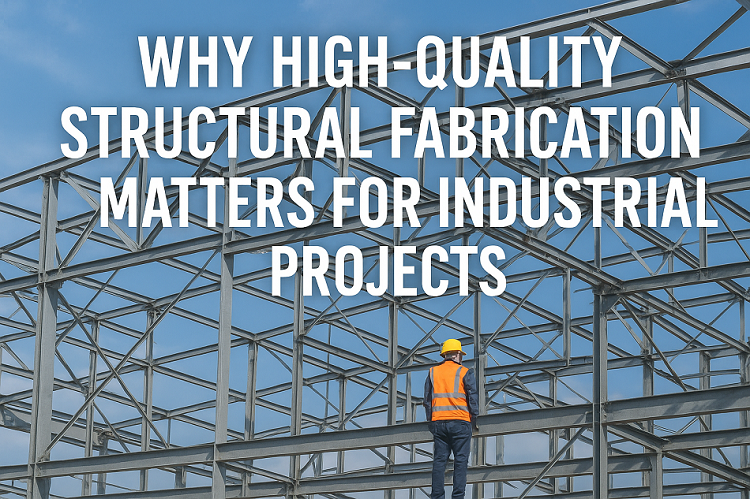
High-quality structural fabrication is one of the most important pillars of any industrial project, whether it’s a manufacturing plant, refinery, warehouse, power plant, or heavy-duty industrial structure. When steel components are fabricated accurately, welded correctly, and inspected thoroughly, the entire project becomes safer, stronger, more efficient, and longer-lasting. But when fabrication is rushed, done with poor materials, or completed without proper expertise, even the most well-planned project can fail—sometimes with serious financial and safety consequences.
In this blog, you’ll understand why quality in structural fabrication matters, how it impacts project performance, and what makes a fabrication partner truly reliable in today’s engineering world.
Understanding Structural Fabrication in Simple Terms
Structural fabrication refers to the process of cutting, shaping, welding, assembling, and finishing steel components that form the backbone of industrial infrastructure. These structures include:
- Steel beams
- Platforms
- Pipe racks
- Columns
- Frames and supports
- Custom steel assemblies
Think of it as the “skeleton” of an industrial facility. Just like a human body needs strong bones, any industrial setup needs structurally sound fabricated components.
High-quality fabrication ensures these structures can bear heavy loads, handle harsh environments, and support operations efficiently.
Why Fabrication Quality Directly Impacts Industrial Project Success
1. High-Quality Fabrication Ensures Safety
Safety is the number one reason why fabrication quality matters. Every steel structure must withstand stress, vibrations, weather, corrosion, and continuous operational loads.
Poor fabrication can lead to:
- Cracks in welded joints
- Misalignment of beams or supports
- Structural instability
- Premature failure of components
In industries like oil & gas, chemical plants, power plants, or manufacturing units, even a minor structural failure can lead to major accidents, financial losses, and downtime.
High-quality fabrication, supported by strong welding, correct alignment, and proper materials, ensures the structure remains safe throughout its lifecycle.
2. Precision Engineering Boosts Performance
Industrial structures require tight tolerances and high accuracy. When fabrication is executed with precision:
- Components fit perfectly during installation
- Less rework is needed at the site
- Assembly time reduces significantly
- Overall project efficiency improves
Equipment like CNC machines, laser cutters, robotic welders, and CAD/CAM software enable fabricators to achieve these precise results. The more accurate the fabrication, the smoother the project execution becomes.
3. Durability and Long-Term Reliability
When industrial structures are fabricated using high-grade steel, skilled welders, and proper quality checks, the result is a structure that performs flawlessly for decades.
High-quality fabrication ensures:
- Better corrosion resistance
- Stronger load-carrying capacity
- Longer lifespan of equipment
- Minimal long-term maintenance
This is why industries that operate in extreme environments—such as offshore facilities, cement plants, and mining—never compromise on fabrication standards.
4. Cost Savings Over the Project Lifecycle
Many decision-makers think high-quality fabrication is expensive. But in reality, it often reduces overall project cost.
Poor fabrication leads to:
- Frequent repairs
- Rework at the site
- Higher maintenance costs
- Delays during construction
- Safety issues that result in downtime
On the other hand, high-quality fabrication minimizes failures and ensures the structure performs flawlessly, saving money in the long run.
Materials Used in Structural Fabrication – Why the Right Choice Matters
Not all steel is the same. The performance of your structure depends heavily on the materials chosen.
Common materials include:
- Mild Steel (MS)
- Stainless Steel (SS)
- Carbon Steel (CS)
- Alloy Steel
Choosing the wrong grade of steel can lead to corrosion, bending, cracking, or premature failure. High-quality fabricators understand which materials are best suited for heavy loads, chemical exposure, temperature variations, or outdoor installations.
Importance of Strong Welding in Fabrication Quality
Welds are the connecting points that hold your entire structure together. If welding is weak, the whole structure becomes vulnerable — no matter how strong the steel.
High-quality welding ensures:
- Strong joints
- Smooth load distribution
- Resistance to cracking
- Long-term reliability
Skilled welders, certified procedures (WPS), and advanced welding methods like MIG, TIG, and Arc welding ensure the structure remains safe and durable.
Quality Control & Inspection—The Backbone of Reliable Fabrication
A professional fabrication company always uses strict QA/QC procedures to ensure every component meets industry standards.
Common inspections include:
- Visual Inspection
- Dimensional Inspection
- NDT (Non-Destructive Testing) such as UT and MPI
- Material Testing Reports
- Weld Testing
- Load Testing
These inspections catch defects early and ensure the final product performs reliably under heavy industrial conditions.
Real-World Consequences of Poor Structural Fabrication
There are several cases worldwide where poor fabrication caused:
- Beam failures
- Platform collapses
- Weld breakage
- Structural bending
- Pipeline misalignment
In many cases, the root cause was traced back to low-quality welding, improper material selection, inaccurate cutting, or lack of inspection. These failures resulted in millions of dollars in damages and risked worker safety.
Choosing the Right Fabrication Partner for Your Industrial Project
The quality of your fabricated structure depends heavily on the company you choose. Here’s what to look for:
✔ Experience in Industrial Fabrication
Companies with industry experience deliver better accuracy and reliability.
✔ Skilled and Certified Welders
Competent welders ensure strong and durable joints.
✔ Advanced Equipment
CNC cutting, robotic welding, and CAD-based fabrication improve accuracy.
✔ Strong QA/QC Framework
Ensure they follow proper testing, inspection, and documentation.
✔ Capacity to Handle Large Projects
Bigger facilities can meet deadlines and maintain consistent quality.
✔ Industry Certifications
Certifications reflect professionalism, safety standards, and quality assurance.
Choosing the right fabricator ensures your project is completed safely, efficiently, and within the planned budget.
Conclusion
High-quality structural fabrication is not just an option — it’s a necessity for any industrial project. When fabrication is done right, your project becomes stronger, safer, more efficient, and more reliable. From material selection to precision engineering, welding quality, QA/QC procedures, and skilled manpower, every step influences how well your structure performs in the long run.
Partnering with a trusted and experienced company like Neocent Engineering ensures each of these critical elements is handled with the highest level of expertise. With a strong focus on quality-driven fabrication, advanced technology, and industry-certified processes, Neocent Engineering delivers structural solutions that stand strong for decades, support heavy industrial loads, and help keep your operations running smoothly without interruptions.
Choosing Neocent Engineering means choosing safety, durability, and long-term project success.
FAQ
1. What is structural fabrication in industrial projects?
Structural fabrication is the process of cutting, assembling, and welding metal components to create frameworks and structures used in industrial facilities, such as factories, warehouses, and plants. High-quality fabrication ensures these structures are strong, safe, and durable.
2. Why is high-quality fabrication important in industrial projects?
High-quality fabrication ensures structural integrity, safety, and longevity. Poorly fabricated structures can lead to failures, costly repairs, project delays, and safety hazards for workers and equipment.
3. What materials are commonly used in structural fabrication?
Steel, stainless steel, aluminum, and sometimes specialty alloys are commonly used due to their strength, durability, and resistance to environmental factors like corrosion and temperature fluctuations.
4. How does fabrication quality impact project timelines?
High-quality fabrication reduces the likelihood of errors and rework, ensuring that components fit perfectly on-site. This keeps projects on schedule and prevents costly delays.
5. What role does precision play in structural fabrication?
Precision ensures that all components align correctly, which is critical for the safety and stability of industrial structures. Accurate measurements, welding, and assembly prevent structural weaknesses.
6. How can industrial projects benefit from investing in quality fabrication?
Investing in high-quality fabrication improves safety, reduces maintenance costs, enhances operational efficiency, and increases the lifespan of the facility. It also boosts overall project reputation and reliability.
7. Are there standards or certifications for structural fabrication?
Yes, many countries and industries have standards like ISO 9001, AWS (American Welding Society) certifications, and other local building codes that ensure quality fabrication practices are followed.
8. How can businesses ensure they get high-quality structural fabrication?
Partnering with experienced fabricators, verifying certifications, reviewing previous project work, and ensuring the use of quality materials and technology are key steps to achieving superior results.

Krupal Patel
Krupal Patel is the CEO of Neocent Engineering Pvt. Ltd., Ahmedabad, specializing in advanced engineering solutions. With over 8 years of expertise in Product Design, FEA, CFD, and ASME-BPVC stress analysis, he has successfully delivered high-precision projects across pressure vessels, piping, and structural systems.